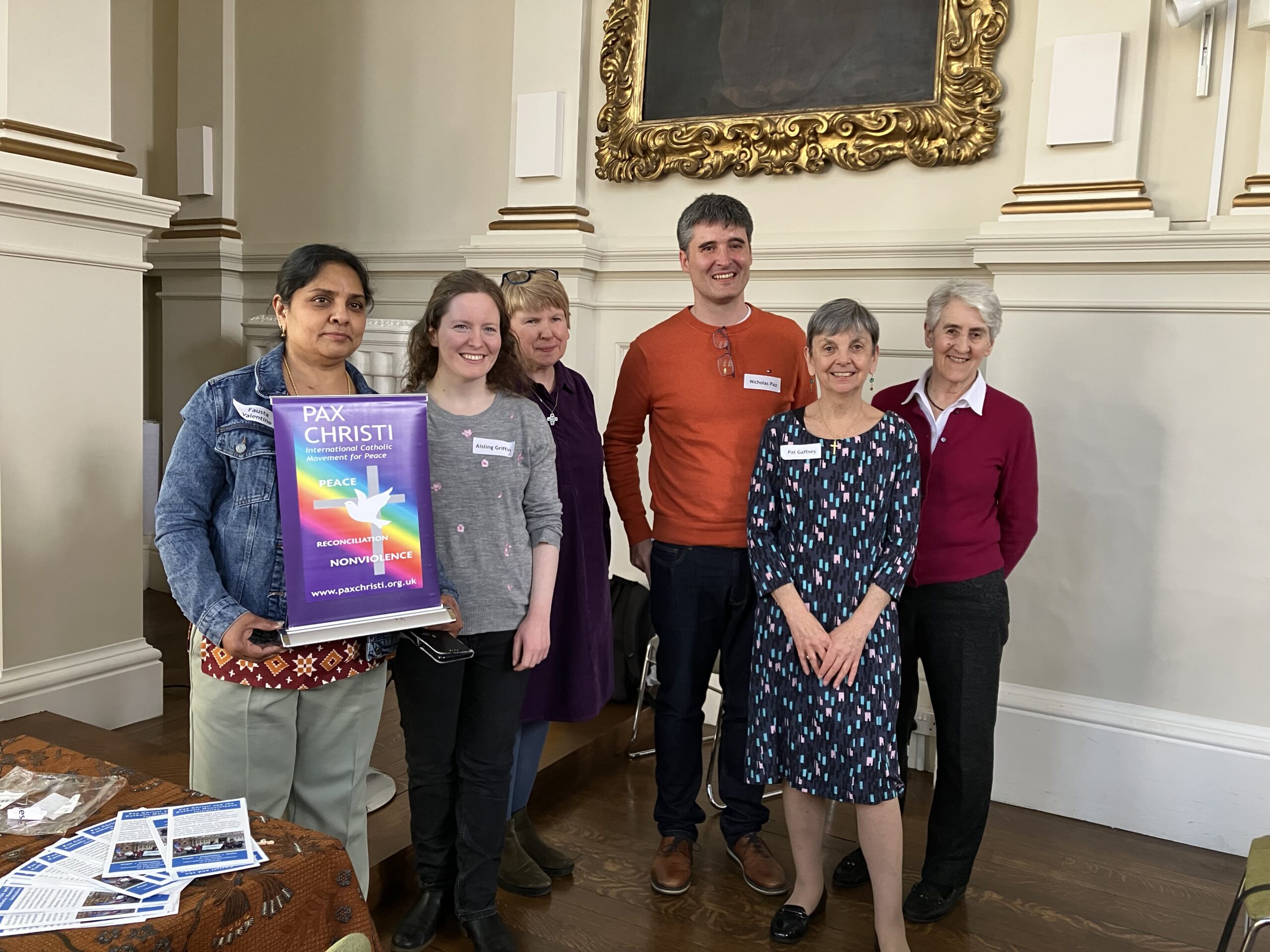
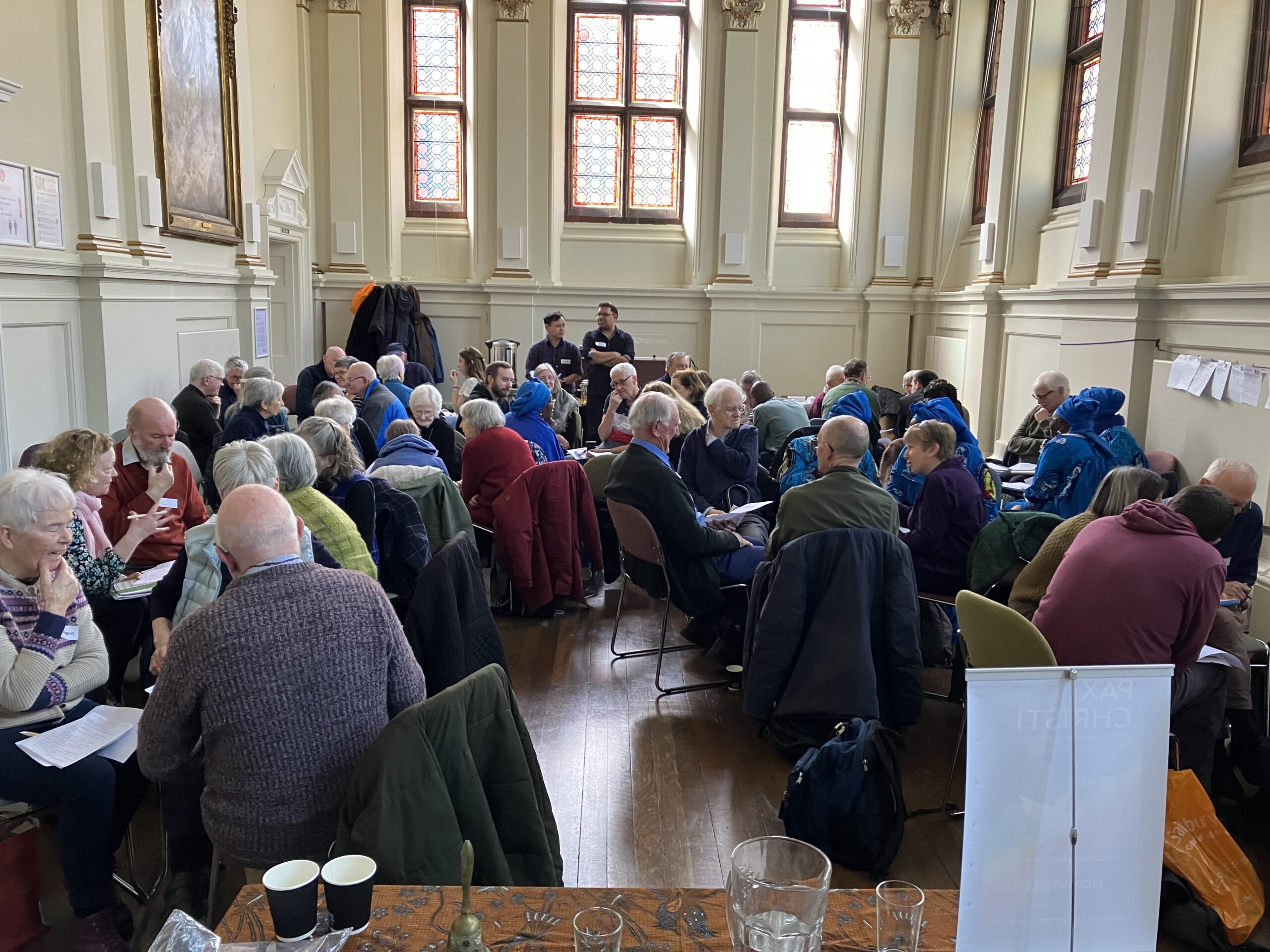
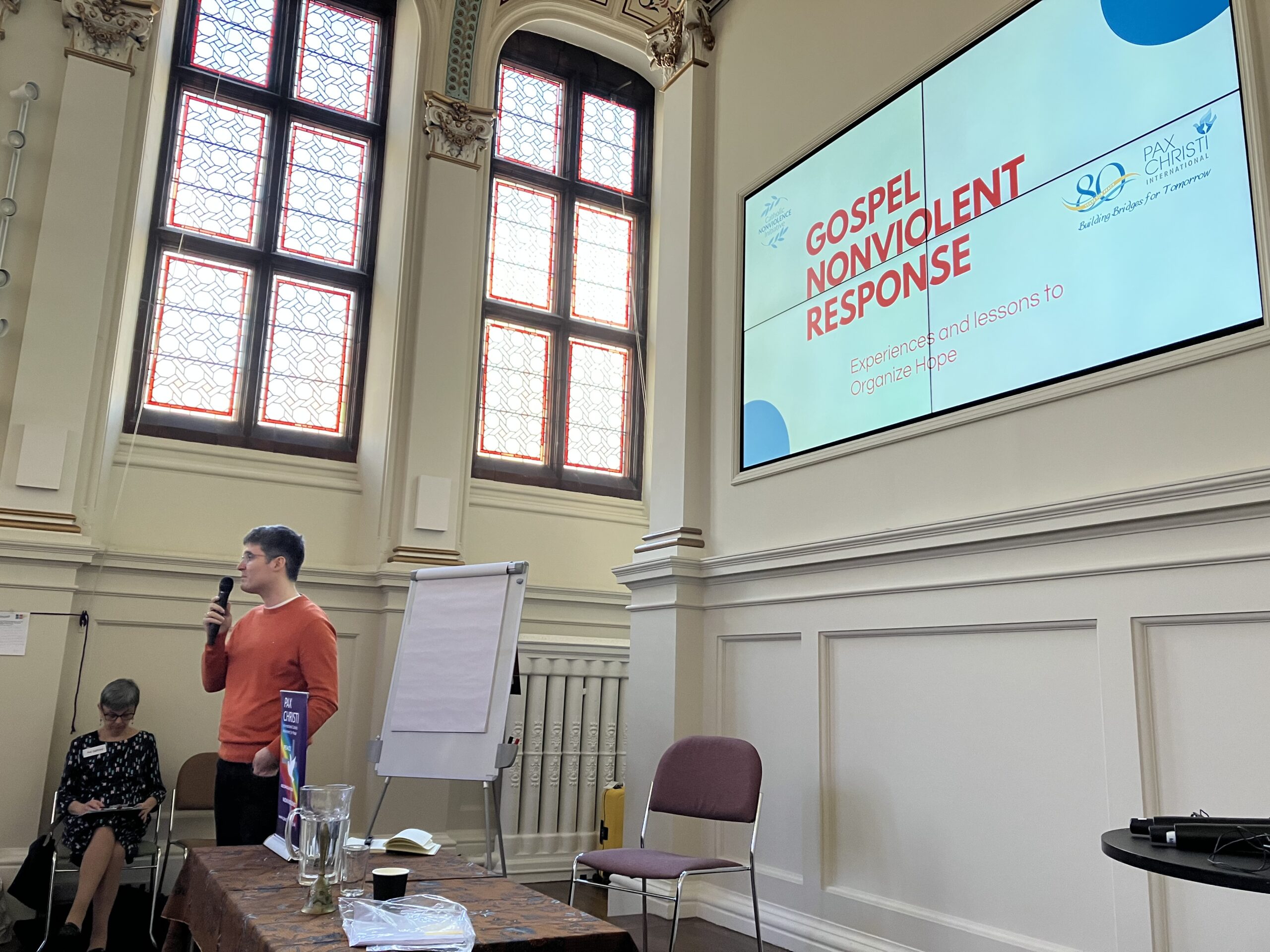
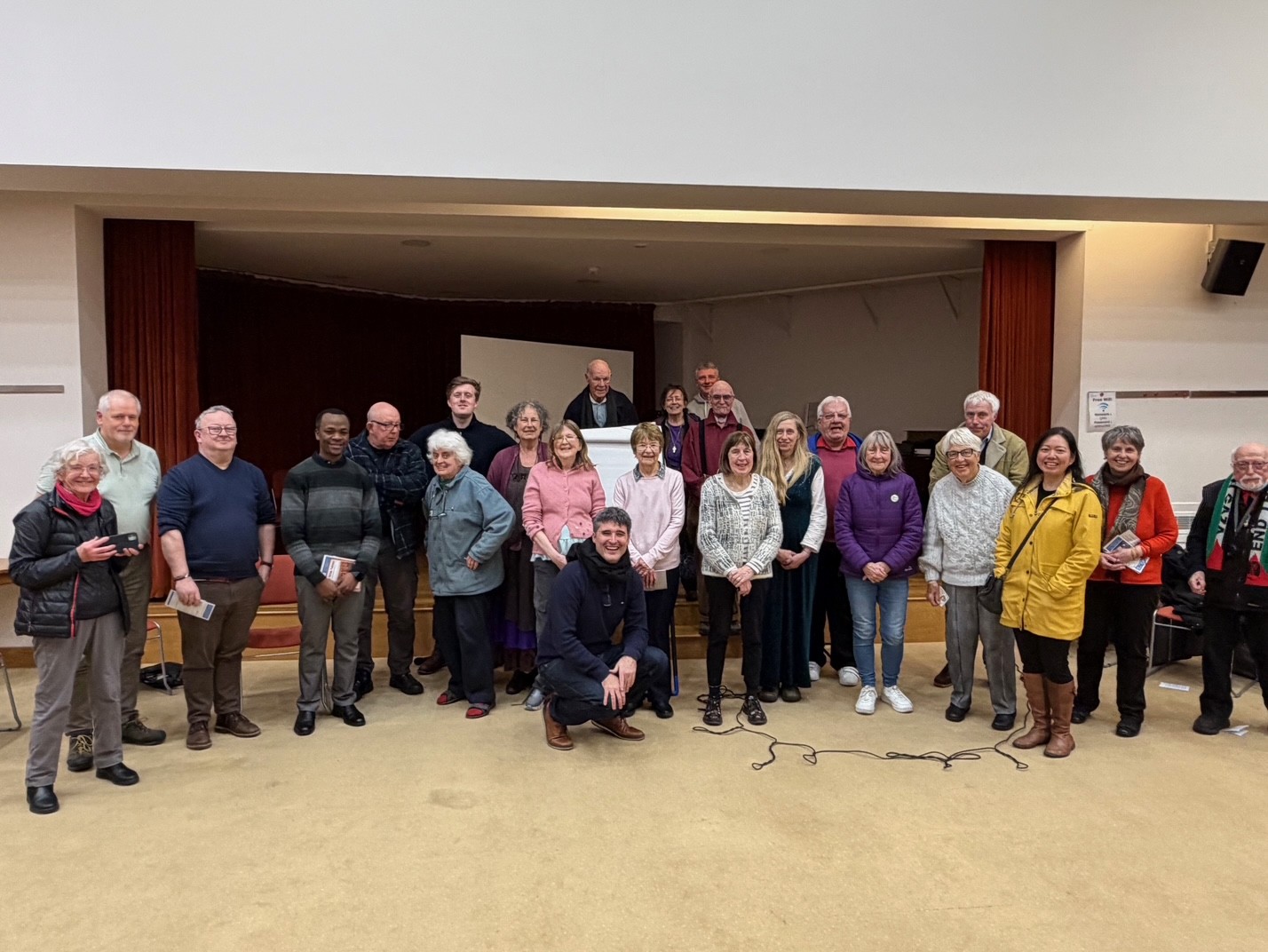
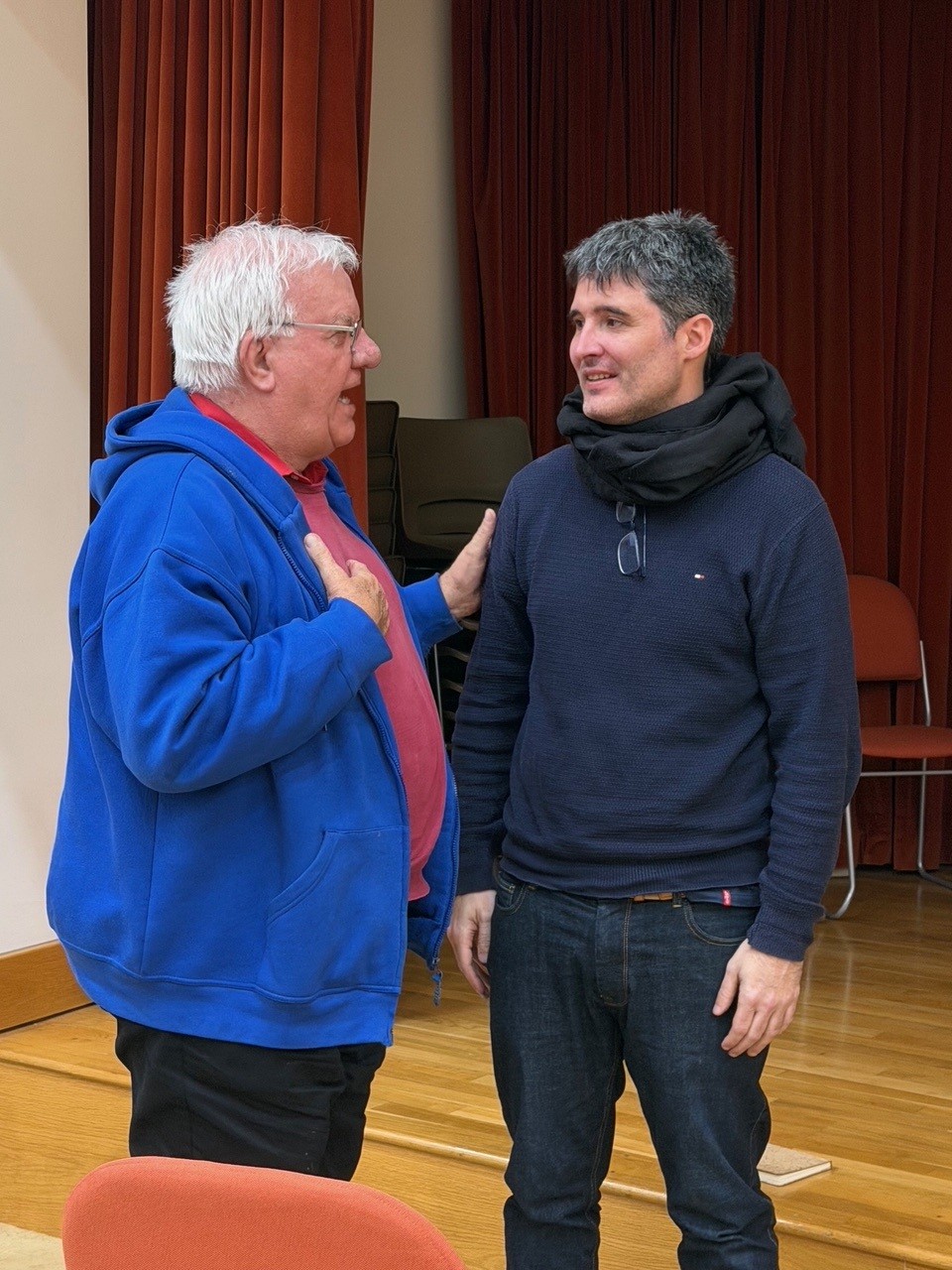
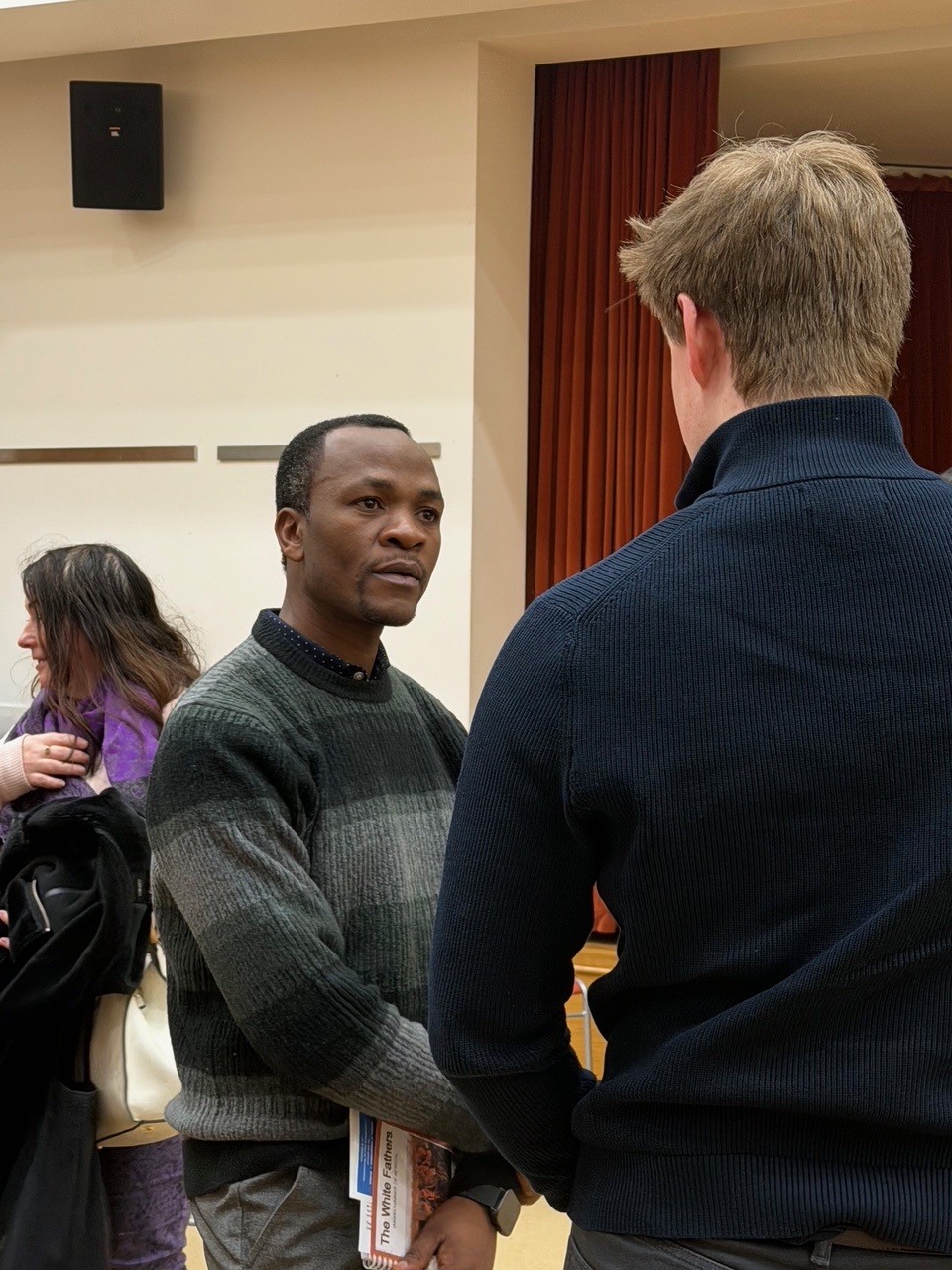
As part of a national tour, Nicholas Paz, director of the Catholic Nonviolence Initiative, led an evening session in Liverpool. In a brief introduction he described his own journey from research work to work in mediation. It was encouraging to hear him assert that nonviolence is recognised as an academic field and that there is hard evidence that nonviolence achieves goals faster and more effectively than through violent methods.
For Nicholas, however, nonviolence was predominantly a spirituality, a deep call to live the nonviolent way of Jesus.
Nicholas invited the thirty people present to name a conflict of concern to them in their life. A rich sharing ensued as people named: personal issues: ‘my own anger’; family situations: ‘my grandchildren struggling with being bullied at school’; community tensions: ‘demonising migrants’; and the global context: ‘world news is too horrifying to watch’. This process took a long time. Watching Nicholas listen with great attention to each contribution was a lesson in itself.
Nicholas affirmed what had been said, commenting, ‘This is what we are living: violence starts when we don’t take time to listen to each other’. He suggested that we need to acknowledge our own violence as the first step and to work in community with others, reminding us that conflict and violence are not the same and that conflict can be addressed nonviolently. He gave us a tool-box of four words; perception, narrative, space and time.
Perception is the way each person perceives reality. It is not fact.
We can describe a narrative with closed language: always, never… , but open language: maybe, perhaps…is more effective at promoting dialogue and disarming violence.
Space is important, whether it is the way one sits in a chair; the layout of a room; the planning of the city… Space conditions behaviour.
Understanding and nonviolence work takes time and requires sitting together.
Unfortunately – and ironically – that was when I had to leave for my train. I would like to have listened a lot longer to Nicholas – and I would have liked to pursue conversations with some of the others in the room who had brought to the space such important real-life concerns.